Ultimate Guide How To Declutter Your Home 2026
Everything you need to know about how to declutter your home — practical methods, room-by-room guides, and expert tips from a professional organiser in London. Start here.
Alci de Lima
10 min read
Decluttering means removing items you no longer need, use, or love — freeing up physical space and reducing mental load.
The most effective methods include KonMari, the 4-Box Method, and working room by room.
Start small: one drawer, one shelf, fifteen minutes. Momentum builds fast.
London homes have specific challenges like limited storage, smaller rooms, but also excellent donation and recycling options.
If clutter feels overwhelming, hiring a professional organiser in London can make the process faster, easier, and longer-lasting.
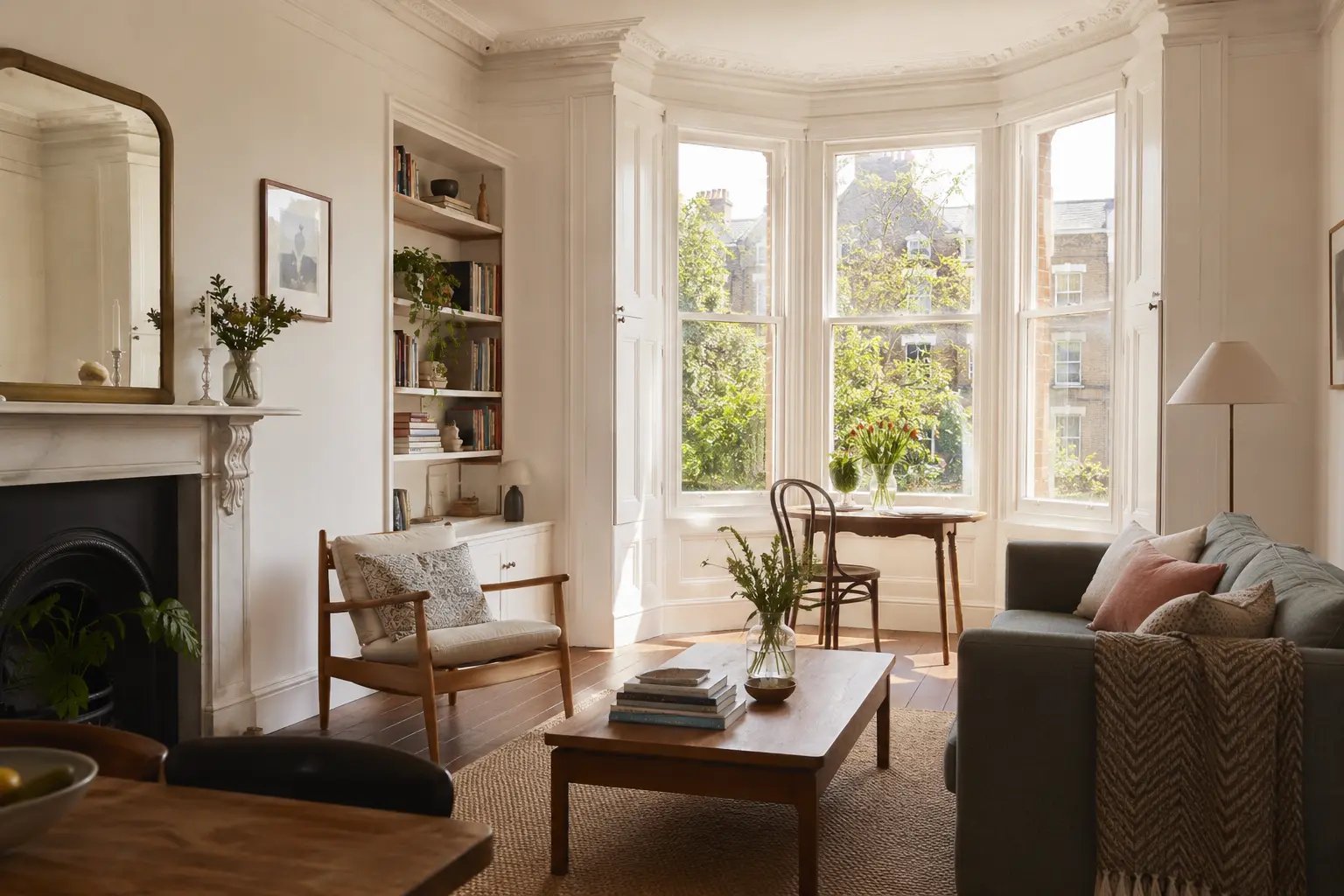
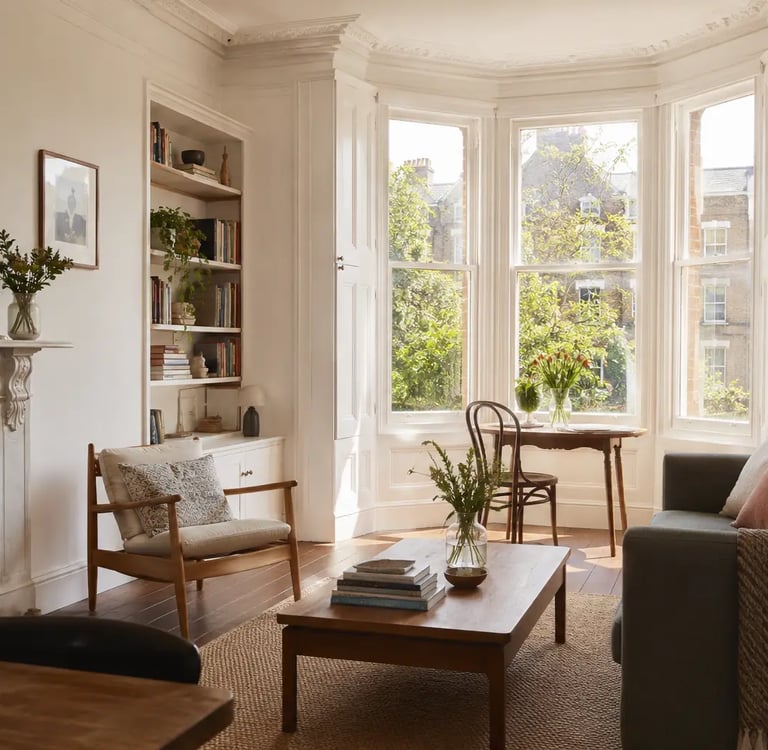
What is Decluttering?
Decluttering is the process of intentionally going through your belongings to decide what to keep, what to let go of, and how to organise what remains. It is not the same as tidying — putting things away so they are out of sight. True decluttering reduces the total volume of possessions in your home, so that everything you own has a place, a purpose, and meaning.
For many people, clutter accumulates gradually. A busy week becomes a busy month, a spare room becomes a dumping ground, and before long the space that should feel like a sanctuary starts to feel like a source of stress. Research consistently links cluttered living environments to elevated cortisol levels, reduced ability to focus, and poorer sleep quality. The inverse is equally well-documented: clearing physical space creates a measurable sense of calm and control.
In London, where the average home is considerably smaller than in the rest of the UK, the relationship between clutter and wellbeing is especially acute. A two-bedroom flat in Hackney or a period terrace in Clapham simply cannot absorb the same volume of possessions as a four-bedroom house with a garage and a loft. The pressure to be intentional about what comes into — and stays in — your home is part of London living.
Decluttering is also not a one-time event. It is a practice. The goal is not a perfect, minimalist home; it is a home where you can find what you need, feel comfortable in your space, and let go of things that no longer serve you.
The Most Popular Decluttering Methods Explained
There is no single right way to declutter. The method that works best depends on your personality, the size of your home, how much time you have, and how emotionally attached you are to your belongings. Here are the four most commonly used approaches — each with genuine merit.
The KonMari Method
Developed by Japanese organising consultant Marie Kondo, the KonMari method asks a deceptively simple question of every item you own: does it spark joy? If yes, keep it. If not, thank it and let it go.
What makes KonMari distinctive is that it works by category rather than by room. You gather every item in a category — all clothing, all books, all papers — into one place before making any decisions. This prevents the common problem of moving clutter from room to room, and gives you a clear picture of exactly how much you own in each category.
KonMari works particularly well for people who have accumulated belongings over many years and are ready for a significant, transformative clear-out. It tends to be a slower, more considered process — which suits people who find decision fatigue a challenge.
For London flats with limited storage, KonMari's category-by-category approach can be revelatory: most people are surprised to discover how many duplicates they own when everything is in one place.
The 4-Box Method
Practical, fast, and flexible, the 4-Box Method requires four labelled containers: Keep, Donate, Sell, and Bin. You work through a room (or a section of a room) and place every item into one of the four boxes without overthinking it.
The key rule: nothing goes back without a decision. If you cannot decide whether to keep something, place it in a fifth "Maybe" box, seal it, and revisit in 30 days. If you have not opened it, donate the contents without looking inside.
This method works well for people who want visible, quick progress and prefer not to handle every object at length. It is also excellent for tackling spaces you have been avoiding — a chaotic kitchen cupboard, a crammed wardrobe, the pile by the front door.
The 20/20 Rule
Popularised by minimalism advocates Joshua Fields Millburn and Ryan Nicodemus, the 20/20 Rule is a useful filter for practical items you are holding onto "just in case." The rule is this: if you could replace an item for under £20 and find a replacement within 20 minutes, you do not need to keep it.
This cuts through the anxiety of parting with things you rarely use but feel responsible for owning. Duplicate kitchen gadgets, backup cables, tools you have used twice — much of what clutters our homes is kept out of vague caution, not genuine need.
The Room-by-Room Method
For families, for people with limited time, or for anyone who finds the idea of a whole-house overhaul paralysing, working room by room is often the most sustainable approach. You choose one space — the kitchen, a bedroom, a home office — and declutter it fully before moving on.
The room-by-room method creates clear milestones and visible results quickly. Completing one room builds the confidence and momentum to tackle the next. It also allows life to continue relatively undisturbed; you are not surrounded by piles of belongings across every surface while you work.


How to Start Decluttering: A Step-by-Step Guide
The most common reason people do not start decluttering is not laziness. It is overwhelm. The task feels too large, the decisions too difficult, and the available time too short. These steps are designed to make starting as easy as possible.
Step 1: Define what you want the space to feel like. Before you touch a single item, spend five minutes thinking about what you actually want from your home. Not a Pinterest board — a feeling. Do you want to feel calm when you walk into your bedroom? To be able to cook without frustration? To invite people over without embarrassment? Clarity about your goal makes every decision easier.
Step 2: Start with the easiest area, not the hardest. Sentimental items — photographs, gifts, inherited belongings — should always come last. Start with somewhere low-stakes: a junk drawer, a bathroom cabinet, a single shelf. Early wins build confidence and make the process feel achievable.
Step 3: Use the 15-minute rule. You do not need a free weekend to make meaningful progress. Set a timer for 15 minutes and work with focus until it goes off. Many people find that 15 minutes turns into an hour once they have started. Even if it does not, consistent 15-minute sessions add up quickly over a week.
Step 4: Make a decision on every item. The goal of a decluttering session is not to move things from one place to another. Every item you pick up needs a destination: keep (with a specific home), donate, sell, or bin. Anything that goes back without a decision is clutter deferred, not clutter resolved.
Step 5: Deal with the outgoing items immediately. Donation bags that sit by the front door for three weeks tend to drift back into the house. The same session or the next day, take the bags to a charity shop, book a bulky waste collection, or list items for sale. Decisiveness at this stage protects all the work you have already done.
Step 6: Create a system to stay on top of it. Once a space is decluttered, it is much easier to maintain than it was to transform. A simple rule — one item in, one item out — prevents accumulation from rebuilding. A brief weekly reset of key surfaces (kitchen counters, the hallway, the desk) keeps things from sliding back.
A common question at this stage: how long does it take to declutter a whole house? For an average London two-bedroom flat, a thorough declutter typically takes between one and three full days when working consistently. Spread across evenings and weekends, the same work can take several weeks. A professional organiser can compress the timeline significantly.
Room-by-Room Decluttering Guide
Kitchen
The kitchen is one of the most used rooms in the home and one of the quickest to accumulate clutter. Start with expiry dates — work through every cupboard and bin anything out of date. Then address duplicates: most households own more than they need of chopping boards, spatulas, mugs, and glasses. Keep the items you reach for daily; donate the rest.
The junk drawer deserves its own session. Empty it completely, sort the contents, and give everything a permanent home elsewhere in the house. If something has been in the junk drawer for over a year without ever being needed, it is safe to let it go.
Finally, tackle the surfaces. A clear kitchen worktop is not just aesthetically pleasing — it makes cooking faster and less stressful. Every appliance that lives permanently on the counter should earn its place through regular use.
Bedroom
The bedroom wardrobe is often the single largest decluttering project in a home. A useful starting point is the turn-all-the-hangers technique: turn every hanger backwards. After six months, anything still hanging backwards has not been worn and is a strong candidate for donation.
Under the bed is another area that deserves honest attention. In a London flat where under-bed storage is a necessity, it should contain things you genuinely use seasonally — not things you are avoiding.
Save sentimental items for last. A photograph, a gift from someone you love, a childhood keepsake — these deserve time and care, not a rushed decision at the end of a long session.
Living Room
Living rooms collect books, media, cables, decorative objects, and surface clutter with remarkable efficiency. Books are a good place to start: be honest about which you will re-read or genuinely intend to read for the first time. Charity shops, local libraries, and websites like Ziffit make rehoming books straightforward in London.
For cables and electronics, the test is simple: if you cannot identify what a cable belongs to within 30 seconds, it is safe to recycle it. Keep a small, dedicated container for cables in current use and let the rest go.
Surfaces — shelves, coffee tables, windowsills — should be curated, not covered. Fewer objects displayed intentionally will always look better than many objects arranged by default.
Home Office
Paper is the enemy of the home office. The vast majority of documents people hold onto "just in case" are either available digitally, irrelevant, or long past their useful retention period. HMRC advises keeping personal tax records for at least 22 months after the end of the tax year; beyond that, most personal paperwork can be shredded. Invest in a small filing system for the documents that genuinely need to be kept.
Digital declutter is increasingly part of a home office clear-out too — an overflowing desktop and an inbox with 14,000 unread messages has a real cognitive cost, even if it is invisible.
Kids' Rooms
Children's rooms require a different approach because the decluttering decisions are not entirely yours to make. For younger children, a toy rotation system — keeping a portion of toys accessible and storing the rest — reduces overwhelm for the child and makes the room easier to maintain. Items that have been in storage for a rotation cycle without being missed are safe to donate.
For older children, involve them in the process. Children who have had a say in what stays and what goes are far more likely to maintain the system afterwards.
If you're feeling overwhelmed by clutter, start here: our step-by-step guide to decluttering when you feel overwhelmed.
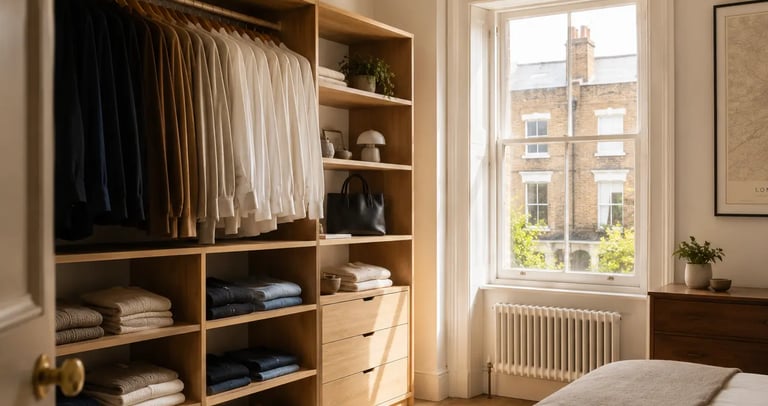

What to Do With Decluttered Items in London
One of the most practical questions in any declutter is: where does everything go? London has excellent options for responsibly rehoming unwanted items.
Donate. The British Heart Foundation collects furniture and large items directly from your home — their house clearance service is free, and they handle everything. TRAID, Oxfam, and Shelter all have drop-off points across London and accept clothing, books, and household goods. For specialist items — musical instruments, sports equipment, professional clothing — seek out charities that specifically need those things. The Trussell Trust food bank network also accepts non-perishable food through local collection points.
Sell. Vinted has transformed the secondhand clothing market and is straightforward to use. Facebook Marketplace is reliable for furniture, appliances, and household items — local collection means no postage. eBay remains the best option for more valuable or specialist items. For a faster process, local car boot sales and online platforms like Gumtree get items moving quickly.
Recycle. Every London borough runs household recycling centres — find your nearest on your council's website. Electronics can be recycled at most large supermarkets or via the manufacturer's take-back scheme. Terracycle offers specialist recycling for items that cannot go in your standard bin.
Bin responsibly. For items that cannot be donated, sold, or recycled, most London boroughs offer a bulky waste collection service, usually bookable online for a small fee. This keeps items out of communal bins and landfill where possible.
One note: the logistical effort of rehoming items is one of the most common reasons people stall mid-declutter. If the process of selling or donating feels like too much, prioritise getting things out of the house over extracting maximum value from them. A cleared space is worth more than a small amount of income from items you have been sitting on for months.
When to Hire a Professional Organiser in London
Most people can make meaningful progress decluttering alone. But there are circumstances where working with a professional organiser makes a significant difference — not just to the speed and quality of the result, but to the sustainability of it.
You are dealing with a major life transition. Moving house, separating from a partner, losing a parent, having a baby — all of these involve a significant reorganisation of possessions as well as life. A professional organiser provides practical help and, crucially, a calm, non-judgmental presence during a period that is already emotionally charged.
The scale feels unmanageable. If you are looking at a whole house, a property clearance, or decades of accumulated belongings, having someone work alongside you makes the task feel finite. A professional will keep you moving forward on the days when decision fatigue sets in.
You keep starting and stopping. If you have started and abandoned the same declutter more than twice, the obstacle is not time or motivation — it is accountability. A booked session with a professional creates a fixed commitment that is much harder to defer.
There may be hoarding tendencies. Hoarding disorder is a recognised mental health condition that requires sensitive, specialist support. A professional organiser who is trained in working with hoarders can make real progress where a well-meaning family member often cannot, because the relationship is different and the approach is non-shaming.
A professional organiser in London will typically begin with a consultation to understand your goals, your space, and any particular challenges. Sessions are hands-on: they work with you, not for you, so the results are ones you understand and can maintain. Packages vary depending on the size of the project — from a single half-day session to multi-day home transformations.
Lima Professional Organiser works with clients across London, from decluttering a single room to full home reorganisations. If you are wondering whether professional support is right for your situation, a no-obligation conversation is a good place to start.


Frequently Asked Questions About Decluttering
Ready to Reclaim Your Space?
Decluttering is one of the most meaningful investments you can make in your home — and in how you feel inside it. Whether you are tackling a single room or the whole house, the principles are the same: start small, make real decisions, and deal with the outgoing items promptly.
If you would like expert support, Lima Professional Organiser offers professional decluttering and home organisation services across London. Sessions are practical, personal, and designed to create results that last.
© 2024 Lima Professional Organiser. All rights reserved. | Sitemap
Contact
Services
Follow
North, West, East, and Central London, including: Camden | Canary Wharf Estate | Chelsea | Greater London | Hampstead Garden Suburb | Holland Park | Kensington | Notting Hill | Putney | Richmond | St John's Wood and nearby areas