The Ultimate Carry-On Packing System: Pack Smarter, Travel Lighter
Learn how to master carry-on packing system with a professional organiser's system — no checked bags, no chaos, no overpacking. London-based tips from Lima Professional Organiser.
Alci de Lima
4 min read
Why Your Carry-On Chaos Is a System Problem
Most people overpack because they don't have a packing system — they have a packing habit. That habit usually looks like: open suitcase, throw things in, panic, add more things just in case, sit on the lid, and still arrive without the one thing you actually needed.
As a professional home organiser based in London, I help clients build systems that reduce decision fatigue and save time. Packing is no different. Once you have a repeatable method, it takes the stress — and the excess weight — completely out of travel.
This guide gives you exactly that: a carry-on packing system you can use for any trip, any destination, any season.
Step 1: Start With the Right Carry-On Bag
Before you pack a single item, make sure your bag is working with you, not against you.
For most airlines (including easyJet, Ryanair, and British Airways), the standard maximum carry-on size is around 55 x 40 x 20 cm. Measure your bag before you travel — cabin crew are checking more strictly than ever.
What to look for in a carry-on:
Structured sides so it holds its shape and doesn't bulk out under the seat
A front pocket for quick-access items (passport, snacks, headphones)
Interior compression straps to keep contents from shifting
Spinner wheels if you have joint issues or do a lot of airport walking
A 40-litre bag is the sweet spot for trips up to 10 days if you pack efficiently.
Step 2: Build Your Packing Categories
The single most effective thing you can do is think in categories before you think in items. This prevents the "just in case" spiral.
Here are the six categories to pack by:
Clothing — broken down by tops, bottoms, underlayers, and one smart outfit
Toiletries — 100ml rule applies; stick to the essentials and what you can't buy there
Tech & cables — phone, adaptor, earphones, chargers, power bank
Documents & admin — passport, booking confirmations, insurance, travel card
Health & comfort — medication, plasters, eye mask, earplugs
Entertainment — book, downloaded content, anything for the journey
Write your list by category before you open the suitcase. This is the rule that changes everything.
Step 3: The Capsule Wardrobe Approach to Packing
A capsule travel wardrobe means every item you pack can be worn in at least two or three combinations. If it can only go with one thing, leave it.
The formula for a 5-day trip:
3 tops (2 casual, 1 that works for dinner)
2 bottoms (1 can be worn day and evening)
1 lightweight layer or jacket
1 smart/versatile outfit option
5 sets of underwear
2 pairs of shoes maximum (wear the bulkier pair on the plane)
Stick to a colour palette of 2–3 neutral tones with one accent. Everything mixes, nothing clashes.
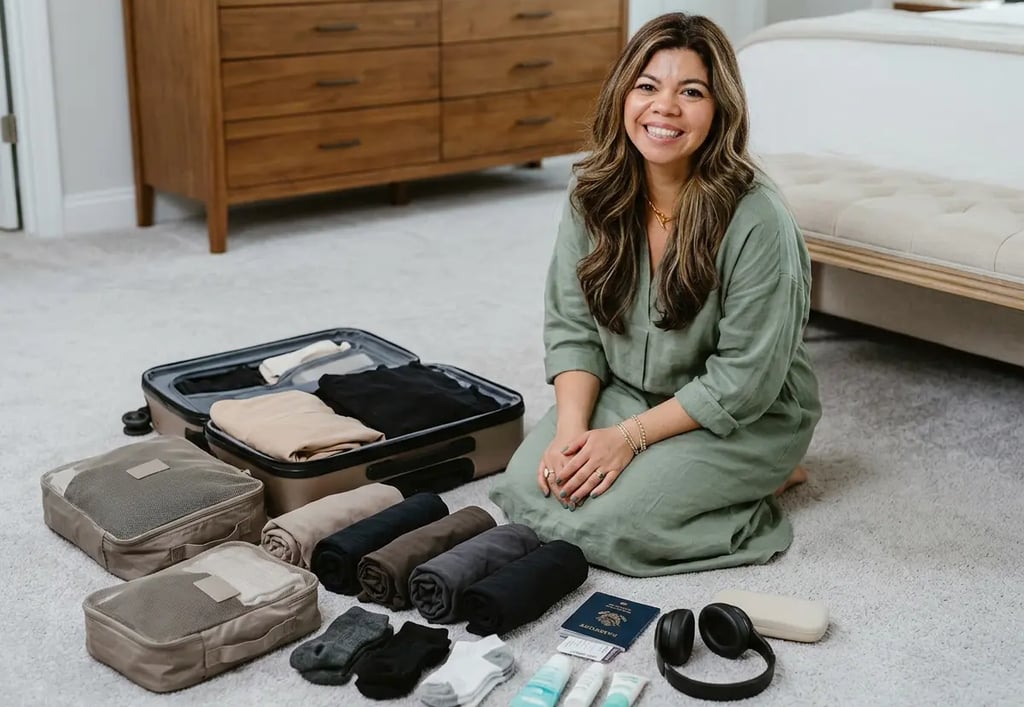
Step 4: Use Packing Cubes (the Right Way)
Packing cubes are the most underrated travel tool — but most people use them as soft drawers and nothing more. Here's how to make them work harder:
One cube per category, not per day of the trip
Use compression cubes for clothing to reduce volume significantly
Keep your toiletries in a hanging organiser that opens flat — it saves unpacking every time
Place heaviest items (shoes, tech) closest to the wheels, lighter items on top
The goal is a cube system you can drop into any bag and immediately find anything in under 10 seconds.
Step 5: The Editing Round
Once everything is laid out and categorised, do a ruthless editing round before anything goes in the bag.
Ask yourself three questions about each item:
Will I actually use this — or am I packing it just in case?
Can I buy it cheaply at the destination if I need it?
Am I packing it because I want to, or because I'd feel guilty not wearing it?
The "just in case" items are what turn a carry-on into a checked bag. Be honest with yourself.
Step 6: What to Always Keep in Your Personal Item
Your second bag (handbag, backpack, or tote) is your lifeline during the journey. Keep it stocked with everything you need if your carry-on were ever put in the hold:
Passport and boarding pass
Phone and charger
Medication (any essentials)
Change of underwear and one top
Valuables (jewellery, laptop, camera)
Snacks and a reusable water bottle (fill after security)
This is your backup system — and it means you're covered even if something goes wrong.
Carry-On Packing Checklist
Screenshot this before your next trip:
When to Call in a Professional
If packing still feels overwhelming — whether because of anxiety, ADHD, decision fatigue, or simply too much stuff — a travel packing session with a professional organiser can be genuinely transformative.
At Lima Professional Organiser, I offer hands-on travel packing support across London. We work through your wardrobe together, build a capsule for your specific trip, and put a repeatable system in place so future packing is faster every time.
It's not just about this trip — it's about never dreading the suitcase again.
Book a travel packing session with Lima Organiser →
FAQs: Carry-On Packing
Can I really pack for 10 days in a carry-on?
Yes — with a capsule wardrobe approach and compression packing cubes, 10 days in a 40-litre bag is very achievable. The key is editing ruthlessly and doing laundry once if needed.
What's the best carry-on size for European flights?
Most low-cost European carriers allow 55 x 40 x 20 cm. Always check your specific airline's policy before travel, as it varies.
Are packing cubes actually worth it?
Yes, particularly compression cubes. They don't just organise — they significantly reduce the volume of clothing, which is the main reason carry-ons get overstuffed.
What should I never pack in my carry-on?
Liquids over 100ml, sharp objects, and anything you'd be devastated to lose if the bag were misplaced or gate-checked. Keep valuables and medication in your personal item.
How do I stop overpacking?
Build your packing list by category before opening the suitcase, do an editing round once everything is laid out, and commit to your capsule wardrobe rules. A professional organiser can also help if you find the process consistently stressful.
Lima Organiser is a London-based professional home and travel organising service. We help busy Londoners create calm, functional systems at home and on the go. Get in touch to book a session.
Key Take Away:
A great carry-on packing system comes down to four things: a clear category method, the right containers, a capsule wardrobe mindset, and knowing exactly what to leave behind. Follow the steps in this guide, and you'll never check a bag again — or pay for one.
© 2024 Lima Professional Organiser. All rights reserved. | Sitemap
Contact
Services
Follow
North, West, East, and Central London, including: Camden | Canary Wharf Estate | Chelsea | Greater London | Hampstead Garden Suburb | Holland Park | Kensington | Notting Hill | Putney | Richmond | St John's Wood and nearby areas