How Do Professional Organisers Decide Where Things Should Go?
Professional organisers don't place things randomly or by instinct. They use a consistent decision framework built around where you use something, how often you use it, and who's using it. The result is a home that runs on logic, not willpower.
7 min read
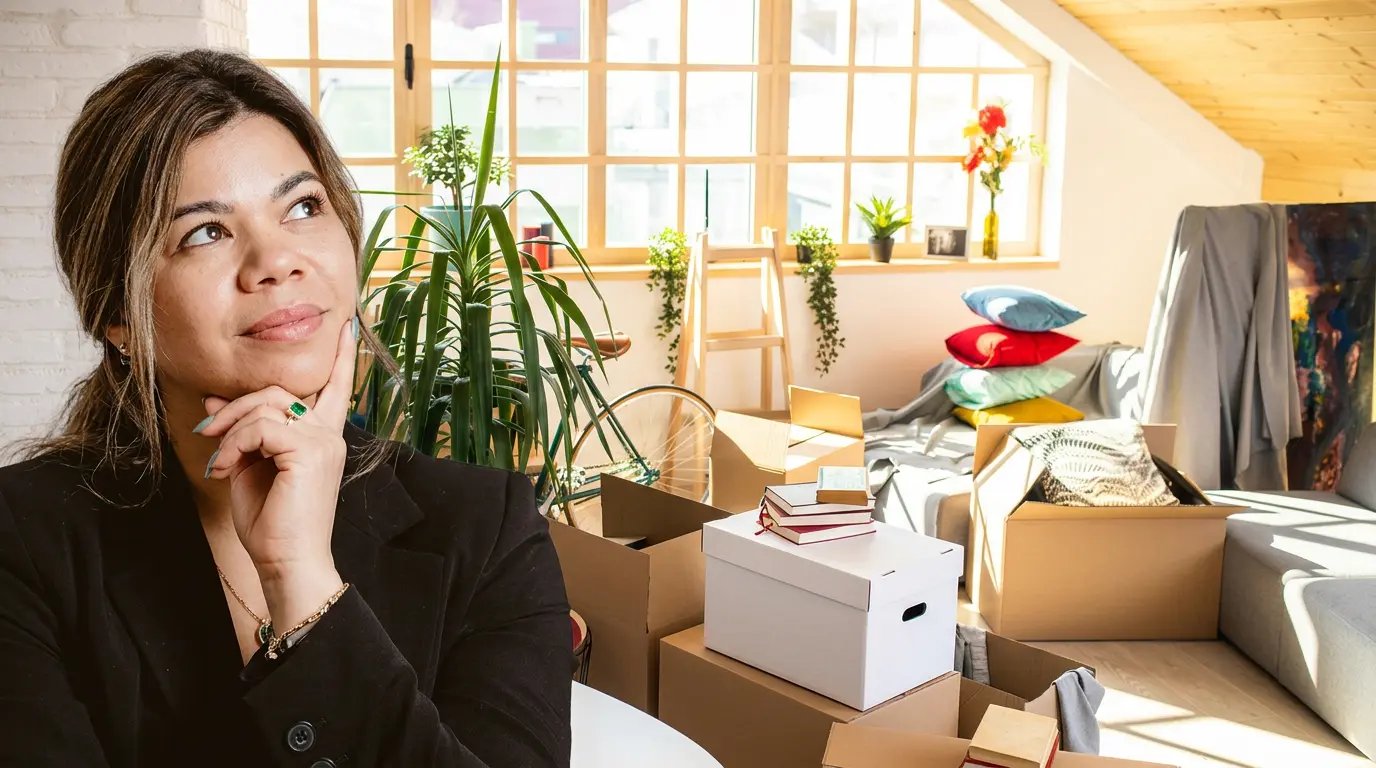

Ever walked into a beautifully organised home and wondered: how did they know where to put everything? It looks effortless, like every object found its rightful place by magic. But behind that calm, clutter-free space is a surprisingly logical system. And once you understand it, you can use it yourself.
Whether you're a busy parent juggling school runs and work calls, someone with ADHD who loses their keys daily, a senior wanting to navigate your home more safely, or simply someone drowning in stuff, this guide will show you exactly how professional organisers think. Not what they tidy, but how they decide where things live.
Spoiler: it's not about aesthetics. It's about behaviour.
The Golden Rule: Where You Use It Is Where It Lives
The single most important principle professional organisers use is deceptively simple: store things as close as possible to where you use them.
This sounds obvious. Yet most of us store things based on habit, tradition, or where they happened to land when we moved in. The result? Friction. Tiny daily frustrations that, multiplied over a lifetime, cost enormous amounts of time and mental energy.
A professional organiser will walk through your home and ask: "Where do you actually do this task?" Not where you think you should do it — where you actually do it.
If you always make coffee in the kitchen but drink it at your desk, your coffee mug belongs near your desk, not in the kitchen cupboard. If you pay bills at the dining table, that's where your filing essentials belong — not in a home office you never use.
This use-location principle transforms how a home functions, especially for people with ADHD or executive-function challenges, where reducing the number of steps between intention and action can make the difference between doing something and not doing it at all.
How Professional Organisers Actually Assess a Space
Before a single item is moved, a good professional organiser does something most of us skip entirely: they observe and ask questions. Here's what that process looks like.
They map the "activity zones" of your home
Every home has invisible zones based on how people actually move through and use the space. Professional organisers identify these by asking:
Where do you drop things when you come in the front door?
Where do the children do homework?
Where does laundry actually get folded (the sofa, let's be honest)?
Where do you charge your devices overnight?
Once these zones are mapped, storage solutions are built around them — not the other way around.
They consider the frequency of use
Not everything deserves the same prime real estate. Professional organisers think in three tiers:
Daily use → prime zones. Eye level, arm's reach, no barriers. Your keys, your phone charger, the pan you use every morning.
Weekly use → secondary zones. Slightly less accessible — a mid-height shelf, a drawer that requires opening a door.
Rarely used → deep storage. High shelves, under-bed boxes, the back of a cupboard. Seasonal decorations, the bread maker you use twice a year.
This tiered approach is especially powerful for seniors, where reducing bending, stretching, and searching reduces both physical strain and falls risk.
They think about who is using the space
A professional organiser working with a family home thinks very differently from one working with a single professional's flat. Key questions include:
How old are the children? (Things used by kids go at their height, not adult height.)
Does anyone in the household have mobility challenges, visual impairment, or cognitive differences?
Who is most likely to put things away — and how much mental effort can they reasonably be expected to spend doing so?
For new parents, this means designing systems that work with sleep-deprived, one-handed chaos. For someone with ADHD, it means visible, open storage over hidden, lidded containers — because "out of sight" genuinely means "out of mind."
The Decision Framework: Five Questions Every Professional Organiser Asks
When a professional organiser picks up an object and decides where it belongs, they're running through a mental checklist. Here it is, simplified:
1. Does this item belong in this home at all?
Before deciding where something goes, they decide whether it stays. Organisers are trained to spot items that are being kept out of guilt, obligation, or inertia rather than genuine usefulness or meaning. This is the foundation of any downsizing project — and it's the step most of us rush past.
2. Where is this item used?
Back to the golden rule. The answer to this question determines the room, and often the exact spot.
3. How often is it used?
This determines the accessibility tier — daily, weekly, or rarely.
4. Who uses it?
This determines the height, the labelling, and the type of container. A five-year-old's art supplies need to be reachable and identifiable by picture, not text. A senior's medication needs to be at a safe height with clear visual cues.
5. What does it need to be stored with?
Professional organisers think in categories of use, not categories of object. Scissors don't belong with other scissors — they belong with whatever task they support. Kitchen scissors go in the kitchen. Craft scissors go with the craft supplies. Nail scissors go in the bathroom.
This "store by task, not type" principle is one of the biggest mindset shifts people experience when working with a professional organiser.
The Psychology Behind Sustainable Organisation
Here's what separates a professional organiser from someone who just tidies: they think about what happens the day after they leave.
A beautifully organised space that requires constant maintenance to sustain is a failure. The goal is a system so logical and frictionless that things want to go back to their place.
Make putting away easier than leaving it out
Every barrier between an item and its home increases the chance it will be abandoned elsewhere. Lids on containers, doors that need to be opened, boxes that need to be moved — these all create friction. Professional organisers deliberately minimise this, especially for high-traffic items.
Open bins, hooks instead of hangers, and shallow trays rather than deep drawers are all tools for reducing that friction.
Visual clarity beats hidden perfection
A common misconception is that professional organisation means everything tucked away behind closed doors. In reality, many of the most effective systems use open, visible storage — especially in homes with children, people with ADHD, or anyone who struggles to remember where things live.
Seeing your items is a retrieval system in itself.
Labels are a form of kindness
Labelling isn't pedantic — it's compassionate. Labels communicate the system to every member of the household, including future-you when you're tired and distracted. They also dramatically reduce the mental load of maintaining a space, because you don't have to remember where things go. You just have to read.
Real-World Examples: The Logic in Action
The entryway: command central
Professional organisers almost universally prioritise the entryway, because it's where the day begins and ends. A well-organised entryway has:
A hook or tray for keys at the exact height of the primary user
A dedicated spot for bags, each person's own
An outbox for items that need to leave the house (library books, dry cleaning, forms to sign)
No general clutter — only items related to coming and going
For families, this one change alone can reduce morning chaos dramatically.
The kitchen: zones within zones
Rather than organising a kitchen by object type (all tins together, all pots together), professional organisers often create task zones: a baking zone with all baking equipment and ingredients together; a morning-routine zone near the kettle; a kids' snack zone at child height with approved snacks only.
The home office: the "ready state"
For busy professionals, the desk and immediate surroundings are organised to support a "ready state" — meaning you can sit down and start working with zero setup. Everything you need for your most common tasks is within arm's reach and in its place.
What This Means If You're Doing It Yourself
You don't need to hire a professional organiser to use these principles. Start here:
Audit your friction points. For one week, notice every time you can't find something, have to move something to reach something else, or abandon a task halfway because the setup is too complicated.
Follow the mess. Stuff that keeps ending up in the "wrong" place is telling you something. Maybe it belongs there after all.
Start with one zone. Choose the space that causes you the most daily stress — usually the entryway, kitchen, or a desk — and apply the five questions above.
Give yourself permission to break the "rules." The bread bin doesn't have to be in the kitchen if you always eat breakfast in the living room.
Key Takeaways
Professional organisers prioritise use location above all else — where you use something is where it should live.
They think in tiers of frequency: daily, weekly, and rarely used items each deserve different levels of accessibility.
Organisation is designed around the people using the space, including their age, abilities, and habits.
Reducing friction is the key to sustainable systems — the easier it is to put something away, the more likely it will happen.
Visible, labelled storage often outperforms hidden, "tidy-looking" solutions, particularly for children, people with ADHD, and seniors.
The goal isn't perfection — it's a home that works with you, not against you.
Frequently Asked Questions
Q: Do I need to declutter before I can organise? A: Generally, yes — professional organisers almost always start with a declutter, because organising things you no longer need just creates a more complicated version of the same problem. But you don't have to do it all at once. Start with one category or one room.
Q: How do professional organisers handle sentimental items? A: With great care and no judgement. The goal isn't to eliminate what matters to you — it's to give meaningful items a proper home rather than letting them get lost in clutter. Many organisers suggest displaying or storing sentimental items intentionally, rather than keeping them in limbo.
Q: What if my household can't agree on where things should go? A: Professional organisers often act as a neutral third party for exactly this reason. Their suggestions are grounded in logic and function, which can make them easier to agree on than one person's preferences. If you're doing it yourself, focus on shared spaces first and frame decisions around "what works best for the whole household."
Q: Is professional organisation worth it for small spaces? A: Absolutely — in fact, small spaces often benefit most. When square footage is limited, every inch of storage needs to work harder, and professional organisers are skilled at finding capacity in overlooked spaces (under beds, inside doors, vertical walls).
Q: How do I maintain an organised space long-term? A: The best systems are self-maintaining because they're logical. If you constantly find yourself "tidying up" the same things, it's usually a sign that those things don't have a good home yet. Revisit the five questions and adjust the system — not your behaviour.
The most organised homes aren't necessarily the neatest-looking ones. They're the ones where everything has a logical place — and where putting things back feels as natural as taking them out.
© 2024 Lima Professional Organiser. All rights reserved. | Sitemap
Contact
Services
Follow
North, West, East, and Central London, including: Camden | Canary Wharf Estate | Chelsea | Greater London | Hampstead Garden Suburb | Holland Park | Kensington | Notting Hill | Putney | Richmond | St John's Wood and nearby areas